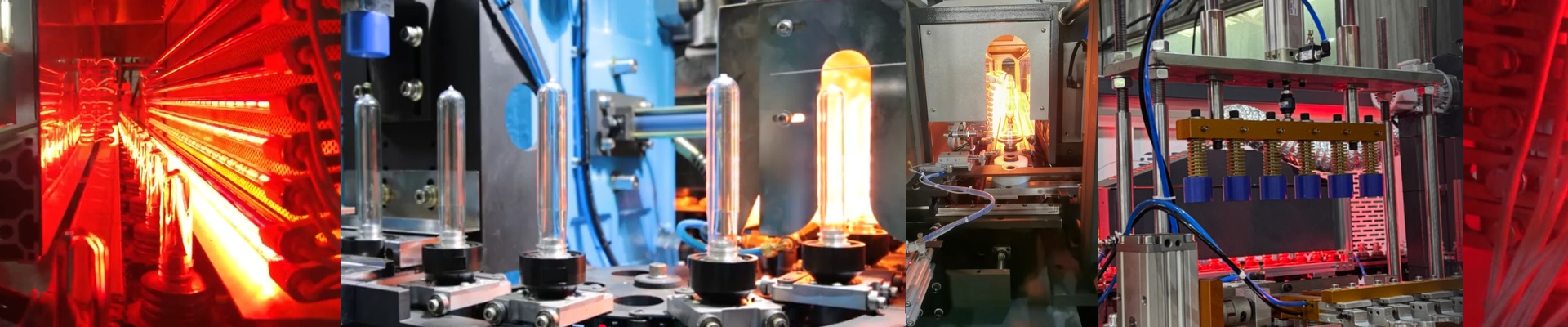
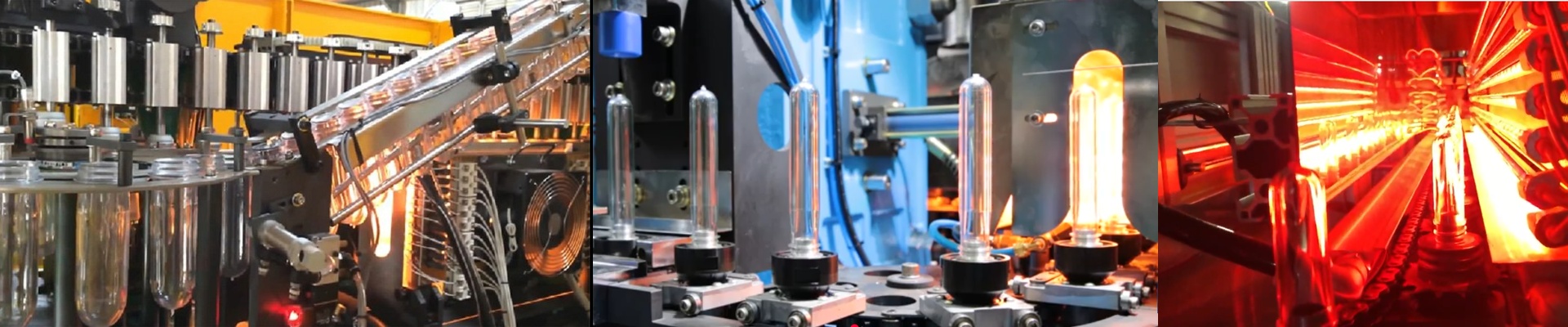

On a blow molding line, the heating tunnel is where the rubber meets the road. Preforms have to land within a tight temperature window before they stretch. If the heaters don’t pull their weight, you end up with weak bottles, blown parisons, and a machine that constantly chases settings. If they flat-out fail, the line stops—and downtime costs pile up fast. What matters under the hood We build industrial quartz heaters for PET machines as short-wave infrared emitters, tuned for fast, repeatable preform heating. The quartz tube comes up to temperature quickly, with a snappy thermal response that helps you match the heating curve the blow molder is calling for. The specs are matched to blow molding duty: rated voltage and power aligned to the OEM heating bank, standard R7s connectors for a quick swap, and dimensions that drop into the common heating module footprints. The output stays concentrated in the near-infrared band, so the energy goes straight into the preform wall, not the tunnel air. Why this works on a stretch blow molding line In stretch blow molding, the preform needs an even temperature across the body and shoulder. Quartz heaters deliver stable radiant heat, so the heating profile holds steady shift after shift. That means fewer thickness swings, lower scrap, and cycle times you can count on. The fast heat-up also helps when you’re switching preform sizes—changeovers move quicker. On the floor, you see less variance in bottle weight and better control over biaxial stretch, which matters whether you’re running carbonated drinks or water. The practical details you can’t skip Installation is straightforward, but alignment is where people get sloppy. Make sure the emitter sits square in the reflector and the connections are tight; if spacing is off, the heat map goes sideways and you’ll get hot spots. These are high-intensity heaters, so they need clean, dry airflow and proper shielding. Handle with care—quartz is tough, but it’s brittle. You get peak performance when the heating bank, reflectors, and controls are treated as one system, not just a single lamp.