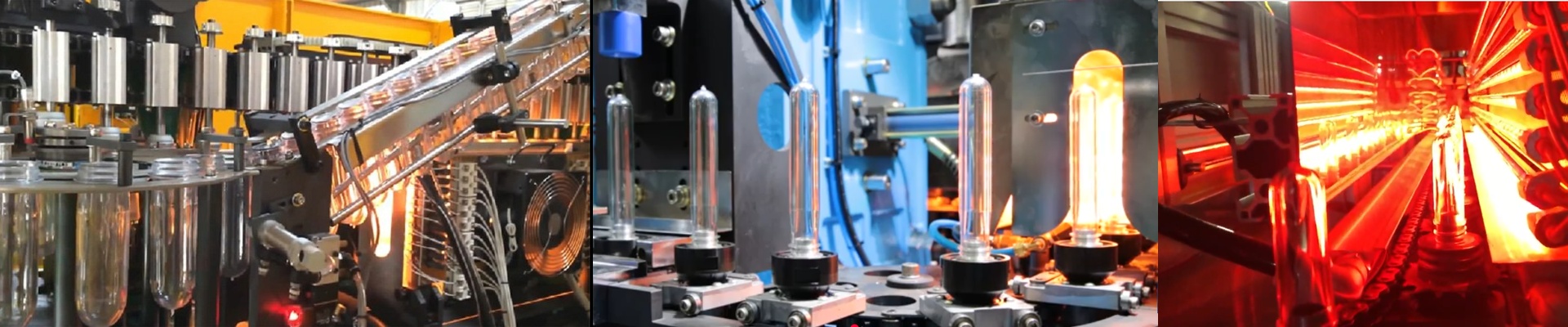
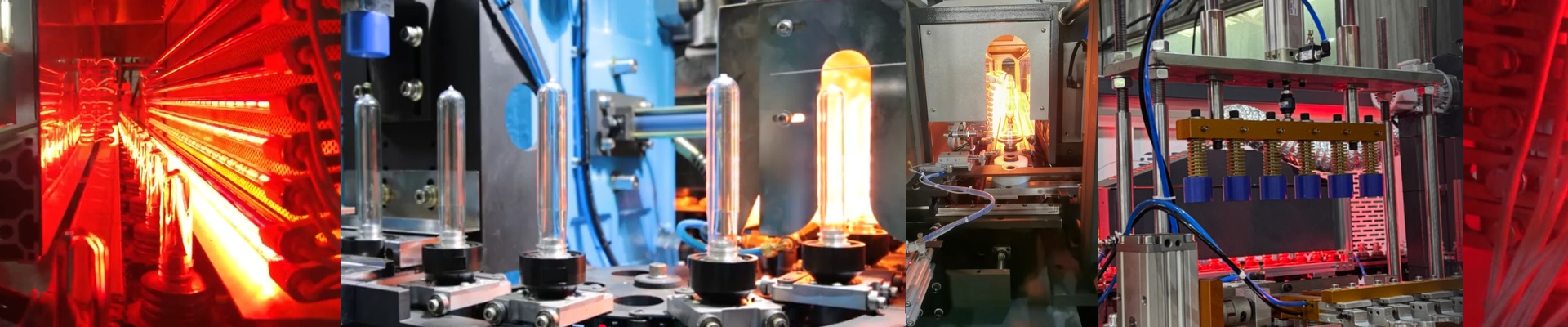

On the blow molding floor, the heating tunnel is where you earn your uptime—or lose it. When a halogen emitter goes down, you don’t just lose a lamp. You lose preform temperature uniformity, the stretch goes sideways, and suddenly you’re chasing rejects all the way down the line. A quartz tube protector on a PET machine is the simple piece that keeps the heat where it belongs: shielding the element and keeping the heating profile stable. What matters, technically We build these protectors for how the line actually runs. High-temperature quartz. Consistent transmission in the short-wave infrared band. Dimensions that match OEM heating tunnels. They’re engineered to fit standard halogen emitters with R7s connectors and the common lengths used on Sidel, Krones, SIPA, Husky, SACMI, and Nissei ASB blow molders. The tube keeps spacing and reflector geometry consistent, so preform heating stays repeatable shift after shift. Why it holds up in practice When it’s installed right, the protector keeps the infrared energy on target and cuts down on exposure to airflow and contamination. In real terms, that means fewer temperature swings in the tunnel, more stable bottle weight and wall thickness, and fewer line stops to chase lamp issues. Plants running 24/7 typically stretch quartz life by 20–30%. That drops replacement frequency and trims spare-part spend. You also see energy use down 5–8%, because the system spends less time reheating after thermal drift. In a lot of cases, the protector pays for itself within a quarter. A few shop-floor notes Match the protector to the exact emitter length, wattage, and connector type. If the spacing is off, the heating pattern changes—and reject rates climb. Handle the quartz with clean gloves and inspect the end seals. A small crack will turn into a failure fast. Schedule the install during a planned window. The protector has to be aligned with the reflector and the preform path to deliver the gains you’re after.