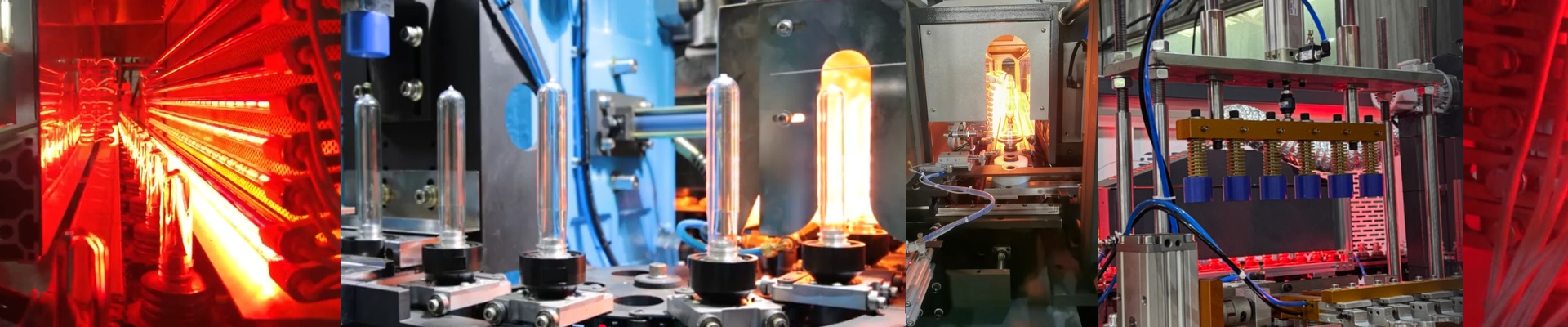

When the dinner rush hits, your deck or rotary oven can’t be chasing temperature. If the main heat lags, the crust suffers. We designed our auxiliary heating element to sit right in the baking chamber and keep the setpoint from slipping, so service keeps moving. What matters under the hood These aren’t the primary burner — they’re fast-response auxiliary heaters that live inside the oven cavity. We use medium-wave infrared emitters in a compact layout that comes up to temperature in seconds, not minutes. Typical ratings are 1–3 kW per module, with 120/240 V options and standard terminal blocks for straightforward wiring. The quartz envelope handles the thermal shock of rapid on/off cycling, and the low thermal mass design gives you tighter control from the thermostat. In practice, that means the oven recovers after loading cold dough or popping the door, instead of dropping 50–80°C and slowly clawing back. Why this matters on a busy line In a pizzeria or bakery, the payoff is real. Recovery happens in a fraction of the time, so ticket times stay steady and the crust finishes evenly — no pale centers, no scorched edges. Because the auxiliary element only supplements, the main burner runs less, and energy per bake cycle comes down. You also get more consistent output across shifts, which matters when staff rotate and the menu doesn’t. The fine print Auxiliary elements are meant to complement, not replace, the oven’s primary heating system. They perform best when the oven’s insulation, door seals, and thermostat are in good shape. Installation comes down to matching voltage and keeping proper clearances for airflow; block the airflow and the element runs hotter, shortening service life. Confirm your oven’s interior dimensions and mounting points before ordering, and plan the wiring with the right amperage protection.